 Governing technology: Can the subaltern speak on social media platforms?
Recently the question of technological governance, in particular the governance of artificial intelligence (AI), has become a central issue in a certain kind of political circle. This is the circle that believes in using politics for the promotion of general welfare. Worryingly, in the fragmented and contentious political discourse now most often conducted through social media platforms, its voice does not always carry through to the people.
In September 2024, the United Nations adopted the Global Digital Compact, which was adopted by 193 member states as part of the UN’s Pact for the Future. One of the aims of the Global Digital Compact is to
This aim seems to have been in discussions, though mostly as a subtext, in this week’s contentious pronouncements regarding freedom of speech on social media platforms and the internet more generally.
This blog post argues that this aim of the Global Digital Compact needs to be made a regulatory priority because, coupled with the uses of AI by social media platforms, the recent pronouncements have the potential to harm freedom of speech while presenting certain individuals, parties and platforms as its defenders.
Free speech and the role of AI on social media platforms
The role of social media in fuelling divisive debates had already been an issue of concern, but the use of AI by social media platforms has heightened concerns from responsible actors across board that the capacity of AI to actively manipulate user behaviour can undermine free speech rather than provide a free space for its exercise.
AI is now deeply integrated into nearly all parts of the work and leisure lives of most people, at least in the global North, and increasingly in the global South too. However, its hidden nature and ‘behind-the-scenes’ uses are not always apparent to those interacting with it.
This is the context in which one must view the recent trend amongst certain right-leaning groups to justify, in the name of freedom of speech, types of speech and arguments which would normally be frowned upon in measured political debates. For example, in his recent comments, the Reform UK leader Nigel Farage has focussed on what he termed as the return of free speech (‘”free speech was back” on X’ ) on social media, especially X (formerly Twitter).
A similar concern for removing ‘bias’ was shown by Meta, the owner of Facebook, who has also decided to do away with ‘factcheckers’ for Facebook, Instagram and Threads (used by 3 billion people worldwide) apparently to remove ‘bias’ and a practice that had become a ‘tool to censor’. Both the owner of X, Elon Musk, and the owner of Meta, Mark Zuckerberg, have recently moved key businesses to Texas from California, the latter considered a more ‘liberal’ state in the United States.
How can AI manipulate user behaviour, reaction or speech?
AI is a computer algorithm or programme that can read patterns if presented with very large amounts of data. Its special features are its speed and scale at which it can handle data, far surpassing the capacities of even the most able human individuals in this regard.
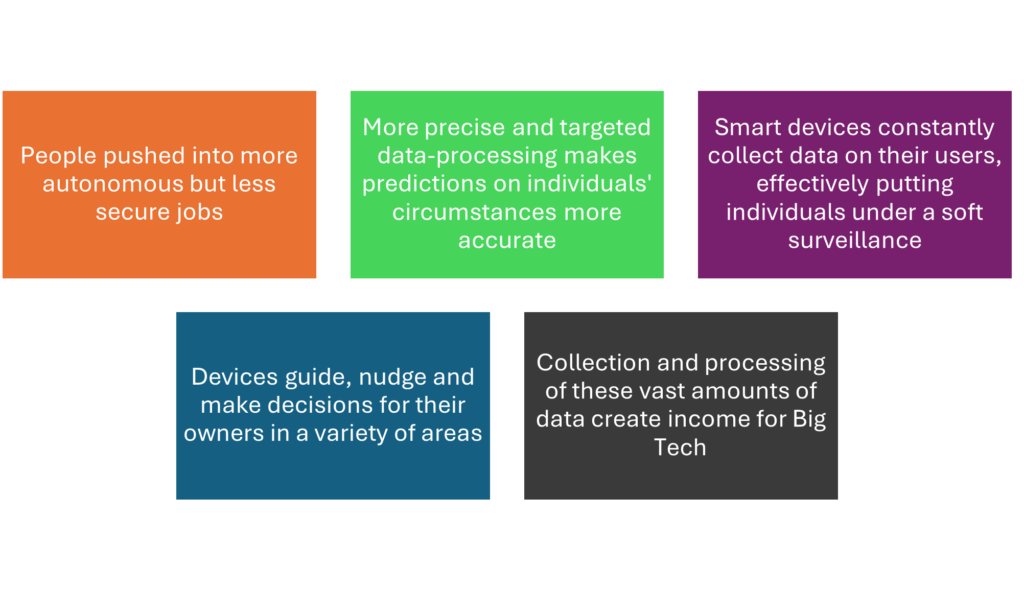
On large internet platforms, including social media platforms, AI models are routinely deployed. They are often programmed to give the owner business certain types of information about the users of the platform. For example, some can work out what makes the users angry (and now many of our devices even have the capacity to read our faces) and put that information together with ‘data’ about our ‘likes’ and ‘dislikes’ we indicate on the platform, the amount of time we linger on a movie ad, and a plethora of other such micro-data over a period of time to work out our personalities and preferences.
The AI not only collects user-generated data but also analyses it constantly. With its speed, and often using the psychological and other expertise that it has been programmed with, it can ‘read’ the minds and behaviours of users who feel they are acting freely in a safe space when acting on the internet. This information has been used successfully to control and manipulate the behaviour and emotions of users once the AI has worked out what makes the user happy, or upset, or angry. They are then shown more of the content which elicits big strong reactions.
These key players’ aim is not to be social with us and engage in conversation, as your neighbour or friend might do if they wanted to find out about you, but to exert control in a way that benefits the people and businesses who have the money, knowledge and resources to create and deploy bigger and more powerful AI algorithms all the time. This control mostly takes the form of ‘nudges’, using the user’s preferences to show them advertisements, news feeds or even friends’ posts that are likely to put them in a certain kind of mood to take a certain type of action, which is ultimately beneficial to the AI owner. This may be a ‘nudge’ or creating digital environment that makes you buy a car or a book or can potentially make you write a divisive and angry political post that you may not normally have written.
This control is not exerted simply by knowing how to develop an AI model. With all the expertise in the world, it would be very hard for a dreaming idealist to sit in their living room or access the local library to create an AI model to match the capacities of Google’s Kubernetes model with its over a trillion ‘parameters’, because that would require millions of dollars to do. In the current AI race, the big players are far ahead and difficult for start-ups, whom they routinely absorb to grow even bigger themselves, to catch up with.
The economic and the political in AI deployment
The justification for the pervasive AI analysis, or ‘surveillance’ of the users, is often given as improving the customer experience by making it easier for the customers to find information that they like or find useful. Importantly, the big technology companies, American and Chinese in the main, have been supported by their governments in developing these technologies in order to create more ‘growth’ or wealth.
However, the United States Senate’s hearings in the elections of 2016 about the Cambridge Analytica scandal heard evidence that suggested powerfully that both in the American elections and in the Brexit campaign on 2016 such technology was used to manipulate the voting behaviour of users.
The cries of ‘disinformation’ and manipulation have been raised from other quarters too implicating Russian, Iranian or other expertise in controlling the behaviour of users through AI, which works at a speed that is overwhelmingly fast compared to human cognition and understanding.
Under these circumstances, does freedom of speech exist in a meaningful way on social media platforms?
Resources and power in the digital space
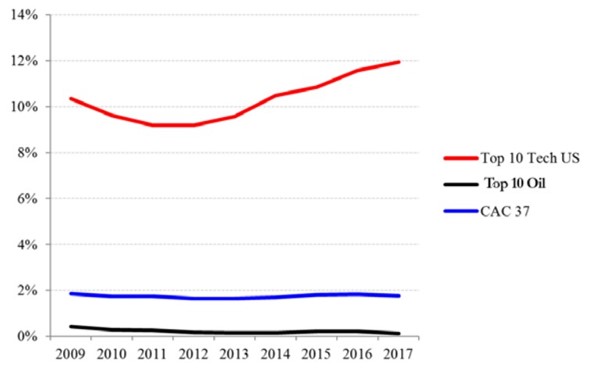
Increasingly, we are being forced to go digital in all walks of life, including work, health, play, communication, studies or politics. More and more free apps and facilities are being made available that make actions easier and more ‘pleasurable’. A lot of them, however, come from a small group of corporate sources. Even smaller companies creating free content use ‘free’ software and platforms made available by the tech giants such as Google workspace or Amazon’s cloud facilities. Amazon, Google and Microsoft together control almost 60% of the cloud infrastructure.
Despite their ‘virtual’ nature, digital technologies run on hardware. The ‘cloud’ is not a free-floating soft, woolly amalgam of gases and light but a huge ‘black box’, or rather banks upon banks of them, controlled and guarded zealously by the big corporates that control them. Entering a facility housing databanks is probably equivalent to trying to enter Fort Knox in the lore of old.
There is good reason for this. Databanks control the arteries of global interactions in almost everything we do digitally, which is not only the internet use on mobiles or laptops but also Internet of Things (IoT), wearable, smart devices and home gadgets. Almost all users, from governments to ordinary individuals, depend on the space and expertise made available by these corporations. All the data generated through all such interactions, whether about satellites in space or my weekly groceries shop done online, or your school’s lessons made available through the internet, your chat with your mother in another country or the businesses hosted in the Amazon Marketplace, is stored here.
Accessing and utilising Big Data
‘Big Data’ or data on a topic in huge quantities, for example, 10 years of my WhatsApp chats, when used to train AI models, provide invaluable insights and patterns of thought and behaviour that can be used in many different ways, leading to more product ‘innovation’ on a scale for Big Tech that is difficult for newcomers to match.
Of course, data is not always free to use as it is the Intellectual Property (IP) of its owner. However, in many cases the user has little real choice in handing over their data to the app/platform they are interacting with.
Further, uses of ‘secondary data‘ are allowed for ‘research’ purposes, specially for scientific research, without permission by most countries’ IP laws. It has often been argued that very large tech companies have used their knowledge and financial resources to hoover up data, use for their AI-training purposes, even in ways not allowed by the law, and then destroyed it. AI training needs such vast amounts of data that it is difficult for owners to know or to prove, particularly as the AI output often does not directly reflect the training input. Big Tech has also sometimes used the strategy of starting with ‘research’ purposes to develop their AI and then switching to commercial, proprietary uses since they have the deep pockets to fight lawsuits should such needs arise.
Power of agenda-setting
With such control that is invasive, often affecting humans at ‘subliminal’ (below the level that we are conscious of) level, and with little power in the hands of humans to resist, either because they have few or no other options to the digital, or because their personalities are being read with a view to manipulating them, exercising freedom of speech in any meaningful way can become problematic.
Moving large parts of human social, political and economic interactions to the digital space, without a transparent, accountable and binding global regulatory architecture in place first puts tremendous agenda-setting powers in the hands of platform owners. This power undermines the aim of the Global Digital Compact to ensure independent, fact-based and timely information for all.
In the context of the moves by Musk and Zuckerberg, it is clear that these parties have their own agendas, which are not purely economic. To take just one example, Elon Musk cut almost 80% of jobs on taking over Twitter, and promoted a culture of ‘long hours at high intensity, enforcing a demanding work environment‘, which was his view of what is worthwhile in a human being’s contribution to a work environment. The debate in philosophy on what is the purpose of technology is old and long: is it there to make work more humane and human-centred, so that the ordinary person may earn a living without breaking body and soul, or is it there simply to make more and more money for an abstract notion of ‘welfare’ where an increase in wealth of a country overall, even if it is only in the hands of the top 1%, is counted as progress or welfare?
To promote his agenda of a gruelling work ethic, Musk, a billionaire, absorbed reported losses in revenues of the platform X, formerly Twitter, and has increasingly politicised his approach to debate, now taking it to government-level in the most powerful country in the world. With an ability to control the users behind the scenes, and a definite agenda to promote, the questions to ask are:
- how far is Musk’s platform a means for ensuring ‘free speech’?
- Should the US authorities, who have clearly recognised the dangers of the technology in Chinese corporations (TikTok’s status and future in the US may depend on the divestment of Chinese interest in the business due to data security concerns), not also apply similar standards to American corporations?
- Is control less harmful when exerted by homegrown didacts?
Margaret Atwood’s timely warning in The Handmaid’s Tale can be aptly applied to any group with the power to preach and manipulate and espousing an extremist philosophy and discourse, not only to a religious source.
Can the subaltern speak in the digital space?
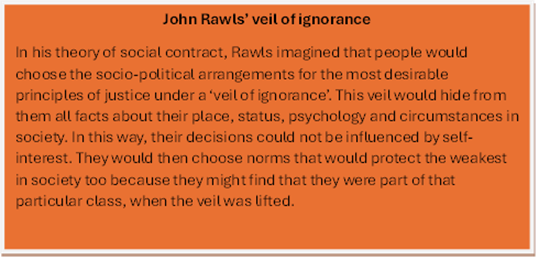
In 1988, the scholar Gayatri Chakravorty Spivak wrote an article titled ‘Can the subaltern speak?’ that provides a pertinent lens for the current debate. When discussing arguments by postcolonial scholars to give a ‘voice’ to the Indian ‘subaltern’ (the economically dispossessed), Spivak asked whether the argument-makers did not end up ‘speaking for’ the subaltern?
In the effort to grant the subaltern – a heterogenous group – ‘collective speech’ did the scholars not end up subsuming diversity in unified classifications that represented their own views of the subaltern voice rather than give voice to the subaltern.
In the AI age, we may further ask whether simply allowing a person/group to post on an issue, when perhaps they may have been ‘nudged’ or ‘manipulated’ or been locked in a ‘filter bubble’ of their own preferences by AI applications, is giving them the right to free speech? The global reach of the internet extends to groups that may not have been allowed, or taught, to critically think on, or indeed, have the knowledge, time or other resources to fully access all the points at issue; does simply putting them in the fraught environment of the internet, often hijacked by the loud, and the loudness magnified by AI, still equate to giving them a ‘voice’ in a meaningful sense?
In any argument-making, the balance of power always tilts in favour of those with the knowledge and resources such as time, insider-knowledge, cultural expertise, technical leverage and financial muscle to shape the contours of the argument.
One may agree with Musk that freedom of speech is fundamental to societies, particularly to democracies, and the United Nations should put it high on its agenda to advocate for mechanisms that make it impossible for powerful individuals and corporations to manipulate the behaviour, actions and emotions of millions of people in the guise of safeguarding their rights. In the AI age, a new category of ‘subaltern’ is emerging: those who are dispossessed of the power to hold the Internet Powers to account.
The subaltern groups may be said to be all those who in their different ways are denied the power to access, or use, digital technologies free from the agendas of those who control the technology but are not accountable for its use. A strange alliance may exist amongst all those who cannot access digital technologies, or walk away from them without incurring almost unbearable costs in access to health, work or other fundamentals, if effect, anyone without choices with regard to digital technologies may be classed as a ‘subaltern’. Just as the economically dispossessed had ranks and hierarchies amongst them so do the digital subaltern and all cases of dispossession are not equal. However, it would be fatally complacent not to keep asking the questions in the global North and the global South:
What stands in the way of the tech billionaires in using AI technologies to promote their own agendas?
What safeguards will guarantee that the continuous interaction of the user with the AI technologies of social media platforms is not, vampire-like, sucking the free-speech rights of the ordinary folk to fatten the powers of the platforms themselves?
Who, in reality, speaks when the internet subaltern speaks?
Image credit: https://unsplash.com/photos/a-white-toy-with-a-black-nose-6UDansS-rPI
 Creating ‘fair’ reciprocities in the field of AI: A proposal for general consideration