
 EU’s AI Act: Why do we need it?
Part 3: The need for a new social contract
The feather-like controls mentioned as ‘panopticism’ by Michel Foucault in his famous Discipline and punish appeared in a startlingly new iteration in the second decade of the 21st century and technology was very much at the heart of the process.
To grasp the nature of the current relationship between technology and society, against the background of the various contestations looked at in Part 2, it is helpful to begin with a key argument made by the philosopher of technology Andrew Feenberg who has posited that ‘technology as currently designed is a key element in the maintenance of political hegemony’ (Kirkpatrick 2020, p.71).
Hegemony is taken here in the sense used by Gramsci to mean ‘a form of domination that works through cultural media of representation’ (Kirkpatrick 2020, p. 71). When a particular group or class succeeds in making its own version of cultural meanings accepted by the majority, that group or class is hegemonic in that culture. It is in this sense that Feenberg’s Critical Theory of technology considers modern technology, along with the socio-economic formations of capitalism, to be hegemonic. By virtue of this role, then, technology, ‘as currently designed’, is considered a main hurdle in achieving a society where every individual is empowered to fulfil their potential, which is the main goal of socialist and other progressive movements for change.

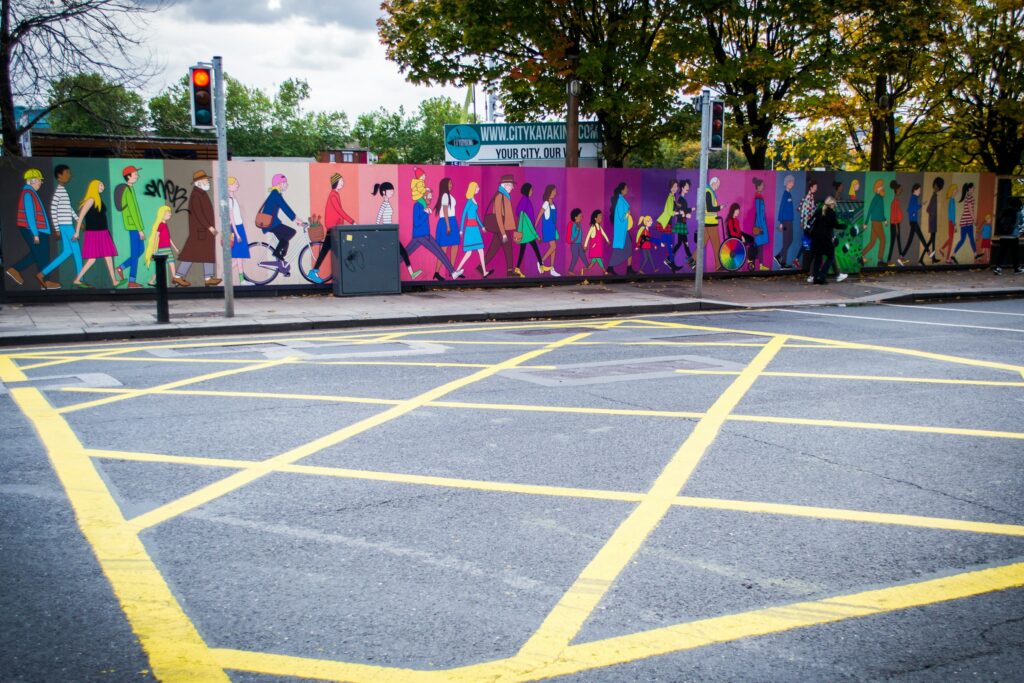
Fig. 1: Cultural hegemony
Digital technology, however, seemed to promise a different iteration of technology at the turn of the century. In the early years of the 21st century, the internet was considered a force for good, a vehicle for promoting an open and democratic global society where ordinary individuals could enjoy freedoms of speech and association, and come together to foster genuine popular solidarity, free from the physical constraints and political oppressions of the non-virtual world. The Arab Spring of early 2010s was considered a typical flowering of the Internet’s democratic and liberating potential.
In the world of realpolitik, with the astronomical growth of digital technology from the end of 20th century, political elite around the world had to take a position on the ‘rise of mass internet use, followed by the ongoing absorption of much of society into social media’ (Kirkpatick 2020, p. 8).
The growth of the economic imperative and the eclipse of the political process
Surveying the EU’s policy on digitalisation in the period 2010–2020, Carlsson and Rönnblom (2022) show that ‘Since the late 2010s, the EU has promoted a “Digital Europe”’ (p. 2).
They note that between 2010 and 2016 this promotion was focussed on ‘good governance and services to citizens as important democratic values related to digital technology’ (p. 4). However, from 2016 a change occurred. From 2016 to 2020 their analysis showed that the values of ‘economic growth and competitiveness’ (p. 4) began to dominate. At the same time, there was a shift in the policy discourse from politics to ethics while the role and influence of private sector in the EU’s policy grew manifold.
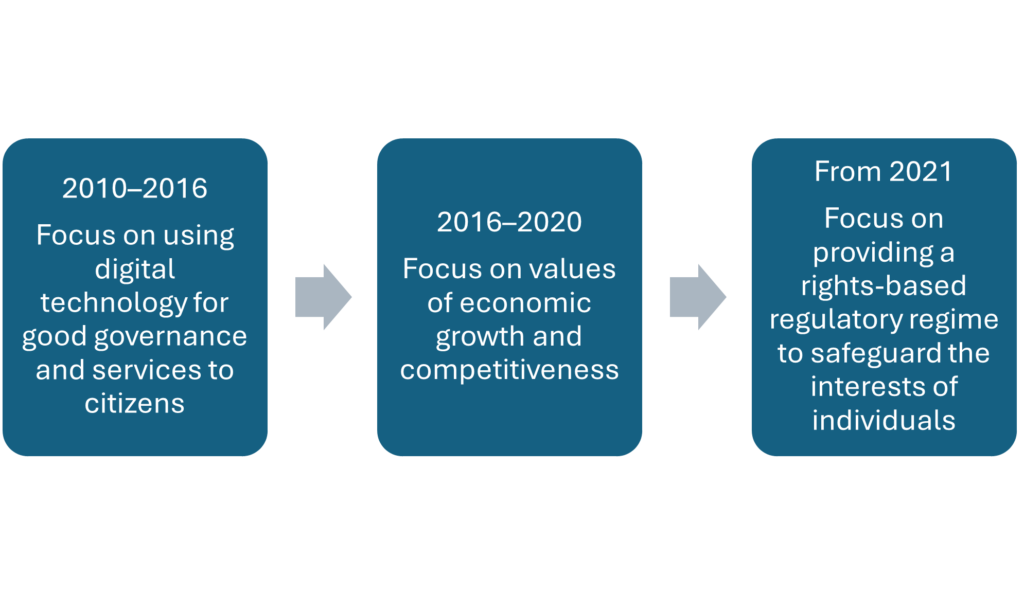
Fig. 2: Shift in the EU’s digital policy, 2010–2024
Based on Carlsson and Rönnblom (2022) and Bradford (2023)
Similarly, Bareis and Katzenbach, also writing in 2022, found the influence of corporates to be equally powerful in media discourse on AI in all those societies where AI technology was beginning to dominate discussions of economic growth. From the 2020s, almost all economically powerful countries or political groupings like China, USA and Europe began to experience this phenomenon. Bareis and Katzenbach suggest that the shift in discourse from politics to ethics gave a disproportionate amount of influence to the corporates because regulatory frameworks ‘foregrounding ethics as a normative framework (Jobin, Ienca, and Vayena 2019)’ help corporates escape regulation even while providing governance of a sort.
From around 2020, however, voices of concern at this political power of the corporates – without corresponding accountability – began to be heard in prominent fora. Like Carlsson and Rönnblom (2022) these voices suggested that the co-optation of the political elite in the digital, especially AI, policy context was leading to an emasculation of ‘the space for collective action and the articulation of conflicts’ (p. 7) that is crucial to the functioning of the democratic process.
The difficulties in problematising the influence of AI technologies
Yet, it seemed difficult to capture the political harms of a technology whose growth seemed driven by popular demand. Graeme Kirkpatrick (2020), in discussing Feenberg’s Critical theory of technology, points out that existing categories of critique seem to be inadequate for capturing the problematic nature of AI technologies. Unlike the technology of the industrial era, AI is not brutal or overtly exploitative. On the contrary, it is related to leisure pursuits as much as it is implicated in work practices. In fact, there is an ‘emphasis … on the smooth flow of consumerist experience [that often ends in] …resolving any trace of antagonism [between the individual user’s interests and those of the corporate providers] in positive, pleasurable experiences’ (p. 116)
It took time to establish that the devices that are ‘natural’, easy to use and seamless to incorporate into both work and leisure practices have a ‘manipulative aspect’ that can ‘reach through symbolic communicative processes and steer people into preferred courses of action’ (Kirkpatrick 2020, p. 114).
This Foucauldian feather-light control of the individual user can be said to have dangerously shifted the balance of power between the mass of ordinary people, often termed ‘users’ or ‘consumers’ of social, economic and even political services, and the small group of ‘Big Tech’ firms who command resources that are beyond the reach of even a majority of governments. The realisation that the backing of this immense corporate power by the political elite leaves little room for guarding the freedom and agency of the ordinary individual began to elicit calls for a new ‘social contract’ to redress this imbalance of power in society.
The AI Act and the re-creation of space for the political
It is against this background that the proposal for legislation to define and limit the role of AI technologies in the AI Act became a radical break from the global political preference for ethics over politics to regulate a technology that was fast gaining unprecedented leverage over the lives of ordinary individuals through both work and play.
According to Ernest Laclau and Chantal Mouffe’s concept of ‘radical democracy’, making visible those power relations in society that marginalise and oppress given groups and individuals is at the very heart of democracy. The ‘capacity of political discourse to produce radical re-articulations of dominant ideas’ (Kirkpatrick 2020, p. 72), so that the limits of what may be proposed and done about changing a given mode of reality, is crucial to democratic politics with all its emancipatory potential.
This process became possible when the civil society, including individuals and concerned organisations, was invited to articulate their views on regulation of AI by the EU in 2020. After the public consultation and following a trialogue amongst the European Commission, the European Parliament and the European Council, the final draft of the Act stated that it sought to promote the
‘uptake of human centric and trustworthy artificial intelligence, while ensuring a high level of protection of health, safety, fundamental rights enshrined in the Charter, including democracy, rule of law and environmental protection against harmful effects of artificial intelligence systems in the Union and supporting innovation.’
By acknowledging that the protection of fundamental rights, democracy and the rule of law are considerations that have at least an equal, if not greater, weight than commercial reasons, the AI Act created a space where the power of Big Tech or the handful of corporations commanding the vast majority of resources and the technical knowhow of the globalized digital sector may at least be contested by or, on behalf of, the ordinary citizens.
Ultimately, politics is about power relations in society. Writing in December 2021, Sætra et al. stated that in the context of AI ‘Big Tech holds much power, while others are perceived to be relatively powerless, or exposed, to this power’ (p. 21). The AI Act was, therefore, urgently needed to bring back politics in the form of State’s regulation of the power of the corporates in the digital sphere, with special relation to the growth of AI. If this space is to be utilised to its full potential, however, an understanding of a new social contract that focuses on the special conditions of the AI Age needs to be clarified and disseminated to the mass of the people as we are all affected by it.
The next blog in the series looks in detail at the environment threatening the existing social contract.
References
Bareis, J. and Katzenbach, C. (2022) ‘Talking AI into being: the narratives and imaginaries of national AI strategies and their performative politics’. Science, Technology, & Human Values, 47(5), 855-881 [online]. Available at: https://doi.org/10.1177/01622439211030007 (accessed 12.12.23).
Bradford, A. (2023) Digital empires: the global battle to regulate technology. Oxford: Oxford University Press.
Carlsson, V. and Rönnblom, M. (2022) ‘From politics to ethics: transformations in EU policies on digital technology’, Technology in Society, 71 [online]. Available at: https://doi.org/10.1016/j.techsoc.2022.102145 (accessed 8.3.24).
Kirkpatrick, G. (2020) Technical politics: Andrew Feenberg’s critical theory of technology. Manchester: Manchester University Press.
Sætra, H.S., Coeckelbergh, M. and Danaher, J. (2022) ‘The AI ethicist’s dilemma: fighting Big Tech by supporting Big Tech’, AI Ethics, 2, 15–27 [online]. Available at: https://doi.org/10.1007/s43681-021-00123-7 (accessed 15.3.24).