Creating ‘fair’ reciprocities in the field of AI: A proposal for general consideration

Creating ‘fair’ reciprocities in the field of AI: A proposal for general consideration


Since attending Professor John Willinsky’s seminar last year on making the copyright system fairer, I have been emboldened to put forward a very early-stage suggestion on another complicated topic in the intellectual property world, i.e., on balancing the various rights involved in the creation and use of artificial intelligence systems.

Context

To provide context, some seminal quotes from the United States National Security Commission on Artificial Intelligence’s (NSCAI) report of 2021, whose sentiments have been repeated by other governments, organisations and experts from different forums, may be useful:

  1. ‘We worry that only a few big companies and powerful states will have the resources to make the biggest AI breakthroughs’ (p. 4, italics added)
  2. AI ‘technologies will be a source of enormous power for the companies and countries that harness them’ (p.7, italics added)
  3. AI ‘is deepening the threat posed by cyber attacks and disinformation campaigns’ (p. 7)
  4. ‘…the United States must act now to field AI systems and invest substantially more resources in AI innovation … Today, the government is not organising or investing to win the technology competition’ (p. 8), and
  5. ‘We found consensus among nearly all of our partners … that AI is an enormously powerful technology … [and there is] responsibility to develop and use AI guided by democratic principles’ (p. 5).

Putting these statements together, what emerges clearly is what Professor Bradford (2023) has called the ‘American market-driven regulatory model’ to AI policy (Bradford 2023). The approach is marked by commercial corporations developing and deploying AI technologies, and reaping the power and profit resulting from the policies of a government in a supportive role rather than one that stands in oversight over them. The power differential that this creates between the ordinary citizen and the combined might of the government and Big Tech (the large American technology corporations that include Apple, Amazon, Facebook, Google and Microsoft) has concerned scholars and activists regarding the space left for meaningfully exercising the freedoms guaranteed to individual citizens by the political system where such freedoms are in conflict with the interests backing fast AI integration in all spheres.

Outside of the United States, too, Professor Bradford (2023) has identified two main political approaches to AI policies, which she calls ‘The Chinese state-driven regulatory model’ and ‘The European rights-driven regulatory model’. The European Union has since passed the EU Artificial Intelligence Act, ‘the first comprehensive regulation on AI by a major regulator anywhere’. However, the EU is the weakest in terms of having the large technology firms that are leading the field in the creation of AI technologies.

China, the other major AI player, has an even closer relationship between the government and technology firms made explicit in a ‘state-driven vision for the digital economy’ (Bradford 2023, p. 8). This state support has seen the emergence of tech giants like Alibaba, Tencent, Huawei, Baidu and Xiomi. Professor Bradford asserts that ‘the Chinese government has converted the internet from a tool for advancing democracy to an instrument in service of autocracy’ (Bradford 2023, p. 9).

The global nature of the digital technologies means that these approaches, and cultural visions underpinning them, are projected across national boundaries as each ‘digital empire’ (Bradford 2023) fights to shape the world’s digital future. The fact and method of the spread of AI technologies, which speed up the digital sphere while concentrating control in ever fewer human hands, will affect whose vision ultimately moulds the relationship between the ordinary individual, the political authority and those wielding economic and technological power in the new world being created by Industry 4.0 technologies.

As things currently stand, people and communities are being invited to choose from a vision of

  • the political authorities as guardians of democratic rights and freedoms such as dignity, liberty and security, liberty of thought, conscience and religion, and others listed in the EU Charter of Fundamental Rights,
  • or, the more libertarian democratic approach of the United States that prioritises the rights of ‘free market and free speech as cornerstones of digital economy’ (Bradford 2023, p. 21),
  • or, China’s approach that seeks to employ technology for ‘economic growth and development while maintaining social harmony and control over its citizens’ communications’ (Bradford 2023, p. 69).

The invitation is not always clear though, nor are the stakes always apparent in the noise and confusion with which AI has suddenly appeared everywhere. The discourse around it, until recently, almost presented it as a divine act beyond human control whose progress could only be challenged at the risk of untenable material harms.

‘Absence of reciprocities’

However, what is emerging only slowly, but still through a considerable body of scholarship, is that the development, use and spread of AI technologies is a complex issue that cannot be reduced to merely a matter of economic growth. The power of the technology is such that it can completely squeeze the ordinary human person between AI-owning powers of authoritarian states and technology corporations controlling the individuals’ socio-economic, behavioural and environmental freedoms, creating novel forms of oppression that press down with all the might that incumbent technologies already tend to acquire.

Beginning from the beginning – the development of artificial intelligence systems itself involves serious conflicts of interest between the rights of the ordinary ‘users’ and the Big Tech providing and controlling major services on the internet. One of the most significant formulations of these conflicts is by-now famous article by Professor Shoshana Zuboff that popularised the term ‘surveillance capitalism’ for the current form of capitalist practices that operate through the digital medium, and of which AI is a formidable part.

According to Professor Zuboff, the new digital systems (which are set to be sped up even further with AI deployment) ‘take direct aim at individual autonomy, systematically replacing self-determined action with a range of hidden operations designed to shape behaviour at the source’ (Zuboff 2019). This behavioural control, which keeps the user locked into a digital dependency on the platforms, is then exploited for commercial gain in the form of data extraction to enrich the data coffers of the companies that mine information about our likes, dislikes, vulnerabilities, moods and desires. Imagine your best friend making money on the side out of your heartfelt confidences!

This is a game-changer, Professor Zuboff goes on to explain, because until now in the modern era of world history ‘reciprocities in economics produced and sustained reciprocities in politics’ (Zuboff 2019). The money power of the capitalists was balanced by their need for workers, whose collective bargaining ensured that it was ‘more difficult for elites to “crush the masses” rather than accede to their demands’ (Zuboff 2019).

In the digital world, however, apps and services even come free oftentimes because the currency of payment, the raw material that delivers profits, is ‘data’ from the users, and not necessarily their small-time dollars. Thus, being able to attract ‘users’, keep them engaged and shifting ever larger areas of their lives to the digital sphere is far more profitable to the platform providers. Their real clients are the the other companies – those wishing to sell TVs, trainers and toys, or even political influence – who pay handsomely for insights into user behaviour and ways to influence or even control it to sell their goods. There are algorithms that have predicted people’s behaviours with greater accuracy than the people themselves.

At the same time, the ‘hyperscale’ at which these companies operate frees them of the need to have large workforces from the societies they operate in. Their employees are fewer, more specialised and able to operate from anywhere in the world. This means that while the companies have the motive, the knowledge, the resources and the political leverage to wield control over the ordinary user’s behaviour, the users have suffered a loss in their reciprocal power to influence the companies’ behaviour in their own favour. Professor Zuboff warns that the ‘choice mechanisms that once adhered to the private realm—exit, voice, and loyalty’ (Zuboff 2019) have been eroded, leaving the users with a serious power deficit compared to the tech companies.

Discourse and hegemony

This worrying gap between the power of the AI developers and deployers and the ordinary citizens in the digital world is further widened by the power of discourse on the subject. The political elite in the United States and elsewhere have identified it as a matter of national security to ‘incentivize investments in and protect the creation of artificial intelligence (AI) and other emerging technologies’ (NSCAI 2021).  The discourse of national security ties AI to the firmly established ideological hegemony and venerated interests of nationalism that remain difficult to argue with.

Consequently, without much debate at the popular level, ‘AI is not just playing games and doing research; it is doing all sorts of basic activities which until recently could only be done by a person’ from taking restaurant orders, to driving cars, to advising on prisoner parole and sentencing, writing legal documents, plays and music, diagnosing certain medical conditions, and providing care, comfort and companionship to those who may have only their devices for company.

Veale and Borgius (2021) noted in connection with the public consultation on EU’s draft AI Act that ‘[I]t is unclear whether limited existing efforts to include stakeholder representation will enable the deep and meaningful engagement needed from affected communities’. This is because the ‘dual-use’ nature of AI, the possibilities of developing it for military and economic purposes both, has begun a power rivalry amongst the dominant nations that has left the public behind. Bareis and Katzenbach (2022) have expostulated that governments ‘are themselves powerful players in shaping our perception and expectation of AI’ in an article that was tellingly titled ‘Talking AI into being: the narratives and imaginaries of national AI strategies and their performative politics’. Veale further analysed the policy stance even in the most sympathetic of regulators, i.e., the EU, in 2020 and found that

considerations of whether ‘computing’ was useful in a given context were often felt to be less important than simply increasing the availability or intensity of digital use.

The desirability of digital is often taken as a given in the current state of discourse on the subject around the globe.

People on the global power periphery

What all this amounts to is that the loss of power experienced by the citizens in the Global North is in danger of being magnified manifold in the Global South, particularly with respect to those at the periphery. The promise of the internet, in its early era, was of promoting freedom and democratic rights for people around the world. The potential of the digital to enable connectivity and voice for millions of people who were without any means of creating solidarities of action with others still survives in popular imagination and in the policy initiatives of multinational organisations like the United Nations. Since 2003, the United Nations has been a staunch supporter of promoting digital solutions to developmental and climate problems, declaring them to be a ‘major catalyst[s] for the 2030 Agenda for Sustainable Development’ in 2020.

Yet, as Png points out ‘[B]oth the Global South and Global North are heterogeneous’ (2023). It is therefore somewhat dangerous to continue with discussing ‘power asymmetries and unequal distribution of AI risks’ (Png 2023) as if they fall neatly into one of the two categories of those applying to the Global North and those applying to the Global South. The difficulties arising from putting the power of AI in the hands of governments that may not have the capacity or the will to resist economic incentives should not be minimised. Cutler (2021) further highlights that in the current climate of international capitalism,

transnational legal regimes prioritise ‘“the protection of the property and economic interests of transnational corporations over the right to regulate of states and the right to the self-determination of peoples”’.

Thus even democratically-minded governments in the Global South are in an unequal position against corporations that can often command more resources than a majority of governments.

This emasculation of the political and legal structures leaves the most vulnerable communities fighting ‘for resources, for rights, for territory, for survival and for profit’ in a grossly unjust and untenable manner. In the ‘Introduction’ to the 2020 report on ‘Technology, the environment and a sustainable world’ by Global Information Society Watch (GISWatch), Alan Finlay points out the importance of framing issues in making visible ‘what is governable, or can be governed’.

Once discussion begins from taking the digital as the best possible option under all circumstances, it becomes arduous to weigh up the benefits and losses of situations like the ones reported on by Nobrega and Varon in this report. With data, images and academic discussion, the authors clearly establish that while Google’s supply chain for its electronics business includes suppliers mining the Amazon rainforest for minerals, it also proposes to save the forest by putting sensors on the trees that will feed local sounds to its AI for recognising such information as the sound of chainsaws. They say,

‘On one hand, the company extracts minerals causing deforestation and threatening Indigenous lands and ways of living, on the other, it offers AI to connect with what some have awkwardly called the “Internet of Trees”‘.

‘Exercise of power through technical strategies’

Google’s approach, typical of all large digital technology firms whether from the US or China fits into Andrew Feenberg’s description of exercising power through such technical strategies. With multistakeholder organisations like the United Nations also providing the technology companies further platforms to showcase their visions, the entire global discourse is structured to enable the identification of ‘problems’ to be solved by technical means only. To use Martin Heidegger’s words, ‘the technological mood’ of our era has scarcely any space for non-technological solutions.

The collection of data from the forest, when subsumed in the virtuous categories of environmentalism, seems like a common-sense beneficial solution to help the local communities. However, what is hidden in plain sight is that the clear objective of commercial firms is to make profit. Hence, data extraction becomes a form of control exerted under a hegemony created by such discourses when the solutions demanded by the local people clash with ‘top-down solutions’ (Nobrega and Varon 2020).

Identifying with the indigenous people of the rainforest, Nobrega and Varon, (‘As [they]… are both originally from Brazil’), clarify instead that the people there want to decide for themselves, they ‘want to get to where the production chains connect; to identify the territories, relationships, common goods and imaginaries they affect. What dynamics are behind the production and use of technology? Which inequalities are reinforced?’ (Nobrega and Varon 2020).

Returning to Professor Zuboff, under the present surveillance capitalism, ‘“User” dependency is … a classic Faustian pact … which … produces a psychic numbing that inures users to the realities of being tracked, parsed, mined, and modified’ (Zuboff 2019).

Technology has become a form of domination that imposes, though only little-by-little and couched in benevolence-speak, an alien vision of life upon lifeworlds that may choose to value objectives other than commercial profits.

If vocal support for democracy is to carry real weight, the multistakeholder global institutions need to ensure that the people on the global periphery are allowed the power and the space to articulate their alternative visions of the future with adequate force, even when their forests hold the minerals required for commercial and technological development identified by some of the most powerful state and non-state interests.

Png suggests that a truly democratic and equitable AI governance debate will allow 3 roles for the Global South voices: to challenge ‘exclusionary governance mechanisms’, to provide local expertise grounded in historic and whole-system approaches, and provide alternative governance mechanisms (Png 2023).

Proposal for creation of fairer reciprocities

In that same spirit of proposing simple but concrete ways to remove such glaring inequities from the prevailing environment for the use of AI, I propose a global remuneration system for the data providers that should go some way towards the creation of the missing reciprocities that Professor Zuboff has pointed out. Though I have little experience or knowledge of the banking and accounting systems but I am hoping that those with better knowledge will still see the germ of a usable idea in what I am proposing here.

Following Marx’s theory of surplus value in the 19th century, Morreale et al have proposed that what is being extracted in the data extraction process of AI development is ‘humanness’, which is the real source of value in the AI development process.

Agreeing with Morreale et al, I suggest that it is, therefore, reasonable to assert that even the free internet services and apps are not truly ‘free’ and a small remuneration for the raw material of data is in order. My proposal has the following steps:

  1.  A monetary value should be attached to each datum, such as each ‘like’ or ‘share’ that is ‘harvested’ by a company.
  2. The value can be a small, almost infinitesimal amount. However, it should be mandatory for all AI systems to have the built-in facility to monitor and calculate this value per piece of data for each time of its use.
  3. As there are machine learning systems that are opaque in the way they reach a decision, all the training data ever entered in their systems shall be presumed to have been used each time they act.
  4. The value against each piece of data, for each time of use, for each AI system used commercially, whether for a ‘free’ service or a paid one, throughout the world, will be deposited with a global agency under the aegis of the United Nations.
  5. Each month, in a well-publicised event, a worldwide lottery draw will choose winners.
  6. The names of the people in the draw will be entered from national censuses around the world and no actual lottery tickets will be sold.
  7. Prizes will only go to individuals, with extra weightage awarded to those of the poorest means.
  8. Those above a given threshold of income from each country will not be eligible. 
  9. There will be a ceiling on the amount that any one individual can acquire through this process.
  10. No one will be entered into the draw in the same year they have already been a winner.
  11. The administration charges for the work will be deducted before the prize draws are made.

I visualise the benefits of this system as:

  • to effect a fairer distribution of wealth being generated through the use of AI than is currently the case.
  • to encourage debates and awareness of AI in affected communities.
  • to allow alternative visions to form and crystallise about problems that are currently being solved with AI or other technologies only.
  • the digital solutions can continue to be proposed by the companies, but their profit-making nature will be clearer.
  • the data providers will become more aware of the value of their data, helping them to choose how they share their data in a more informed manner.
  • the lottery draws can also become a monthly forum for debating non-digital solutions to given problems, balancing costs and benefits of digital solutions in a more holistic and not merely in a monetary context.

I am aware that this is a step that will need to be refined if it is to be implemented and I hope others will build on it. In the context of the US–China rivalry in the AI field, it may be fitting to end with the words of Mao Zedong, whose spirit was not observed at the time, but let’s hope can be captured now: ‘Letting a hundred flowers blossom and a hundred schools of thought contend is the policy for promoting progress in the arts and the sciences and a flourishing socialist culture’.

References

Bareis, J., and Katzenbach, C. 2022. ‘Talking AI into being: The narratives and imaginaries of national AI strategies and their performative politics.’ Science, Technology, & Human Values, 47(5), 855-881. https://doi.org/10.1177/01622439211030007

Bradford, A. 2023. Digital empires: The global battle to regulate technology, Oxford University Press.

Cutler, A. C. 2021. ‘Reclaiming sovereignty: Resistance to transnational authority and the investor-state regime’, in Peer Zumbansen (ed.) The Oxford handbook of transnational law, ttps://doi.org/10.1093/oxfordhb/9780197547410.013.36 

Feenberg, A. 1991. Critical theory of technology, Oxford University Press.

Finlay, A. 2020. ‘Introduction’, in GISWatch, 2020 – Technology, the environment and a sustainable world’ (accessed 13 September 2024).

Morreale, F., Bahmanteymouri, E., Burmester, B. et al.2023. ‘The unwitting labourer: extracting humanness in AI training’. AI & Soc. https://doi.org/10.1007/s00146-023-01692-3 (accessed 13 September 2024).

Nobrega, C., and Varon, J. 2020. ‘Big tech goes green(washing): Feminist lenses to unveil new tools in the master’s houses’, in GISWatch, 2020 – Technology, the environment and a sustainable world (accessed 13 September 2024).

Veale, M., and Borgesius, F. Z. 2021. ‘Demystifying the draft EU Artificial Intelligence Act,’ SocArXiv. July 6. doi:10.9785/cri-2021-220402.

Png, M. T. 2022. ‘At the tensions of South and North: Critical roles of Global South stakeholders in AI governance’ inJustin B. Bullock et al. (ed.) The Oxford handbook of AI governance, Oxford University Press, https://doi.org/10.1093/oxfordhb/9780197579329.013.57

United States National Security Commission on Artificial Intelligence’s (NSCAI). 2021. The final report. Available at https://reports.nscai.gov/final-report/ (accessed 13 September 2024).


Riots, bias, IPR and questions on AI technology
Riots, bias, IPR and questions on AI technology

Politics this week, in both US and the UK, has featured prominently some of the issues touched on in earlier blogs about AI technology. As always, things move so fast with this technology that politicians and, to a far greater extent, the public are left reacting haphazardly to its effects and uses. The lack of coherence and the serious issues at the heart of using this technology, therefore, demand constant thought and clarity lest we walk into an era of new norms that none of us remember choosing, far less agreeing with.

Social media and public information

With reference to the riots that took place in the aftermath of stabbings in Southport on 29 July 2024, Professor Andrew Chadwick, professor of political communication at Loughborough University, and an expert in the spread of online misinformation, has been quoted as saying that a ‘complicated mix‘ of ingredients converges to bring about the kind of heightened passions and public disorder seen in the wake of the stabbings. He was being asked about the role played by social media rumours that had spread the notion that the stabbings had been carried out by a migrant, possibly a Muslim or Syrian person.

Professor Chadwick emphasised, however, that it was not just the false name or the rumour around it but

the way these are used by public figures and interested parties that is equally important in causing the kind of surprising scenes of disorder witnessed this week.

This issue has been simmering for nearly a decade since information began to come to light about social media algorithms that promote controversial or emotive content much more aggressively than normal material, for commercial reasons. In March 2021, Karen Hao reported in MIT Technology Review that even after the fierce Cambridge Analytica scandal of 2018, in which personal data had been ‘surreptitiously siphoned‘ from millions of Facebook users to sway the 2016 US elections in Donald Trump’s favour, Facebook efforts at mitigation had not targeted the spread of misinformation via their platform.

Instead their efforts had been focussed much more on addressing bias against disadvantaged groups on their platform. While in itself a laudable objective, the better-targeting of marginalised groups actually serves to promote the business aims of social media platforms so it is difficult to attribute this initiative to pure altruism. Hao quotes Professor Hany Farid of University of California, Berkeley to make the point that the aim of business growth at all costs means ‘maximizing engagement’ trumps considerations of veracity and truth. In fact, Professor Farid suggests that ‘harm, divisiveness, conspiracy’ tend to become the friends of businesses in these circumstances by bringing them more subscribers.

With this information in their hands, and social media becoming the major source of socio-political communications, politicians of dubious intent have revelled in placing incendiary gossip, innuendo and out-of-context diatribe on their accounts to gain political traction. The early promise of the internet giving a voice to the people, and thus promoting democracy, has become a far more mixed proposition in light of these developments. Ethical certainties of the past and the role of various players in their upkeep are often exhaustingly complicated now.

Ethical confusion and the need for a new business model

Ironically, while the rumours and misinformation regarding the Southport incidents in the UK spread through X, formerly Twitter, the owner of the platform was accusing Google algorithms in the US of obstructing the flow of information on Donald Trump, though other reporters did not always have the same search experience that he did.

With serious and frivolous, true and false, pleasant and atrocious all jumbled up in the same digital space, and competing for the individual’s attention at lightening speeds and voracious volumes, the ease with which misinformation can be unleashed amongst the public is alarming for supporters of democracy. In his 2016 book Homo Deus, Professor Yuval Noah Harari had pointed out how our private data is the most valuable asset in the digital universe which we end up giving away for free to Big Tech algorithms.

All those thousands of likes and shares on social media, as well as information about our relationships and interests, feeds the algorithms that enable large platforms to attract advertisers. What is more, this information helps build profiles that can potentially be used to exert subliminal control of users by ‘nudging’ them to buy more of what they like or, alternately, to help politicians understand ‘what each candidate needs to say [to each user] in order to tip the balance’ in their favour (Harari 2016, p. 397). This level of control of individual views and choices is pernicious to democratic societies because it subverts popular will, through unaccountable power and influence, for commercial or political gain.

A business model that prioritises economic growth alone, even at the expense of weightier, but often intangible, human imperatives poses a grave risk to societies valuing human freedom and well-being as non-negotiable values.

Facial recognition, bias and shifting boundaries of police authority

At the same time, the ethical dilemmas are deepened by the need of the authorities to gain control of the situation. Reacting to the riots in the wake of the Southport incident, the prime minister indicated that the government ‘might use these riots to sanction greater use of facial recognition cameras‘. This use of fire to fight fire, or technology to combat technology, may seem inevitable, however, much caution has been urged with regard to the use of facial recognition technology for law enforcement.

The use of this technology involves real-time comparison of facial biometrics of members of the public with facial biometrics of people on a police watchlist. Images of people captured through CCTV cameras are converted to numerical data and the data is then compared with similar numerical data for the images on the watchlist. Images that do not match are deleted instantaneously while those matched are then checked by a human operative before action is taken. In the case of Bridges v The South Wales Police in 2020, the judges noted that the South Wales Police had not failed in its efforts to ‘to equip itself with information on possible or potential disparate impacts, based on the information reasonably available at that time’, yet their judgement was that

‘too much discretion is currently left to individual police officers. It is not clear who can be placed on the watchlist nor is it clear that there are any criteria for determining where AFR [facial recognition technology] can be deployed.’

Thus, it is easy, even with the best intentions, for this technology, which one of the experts in the trial testified was often found to contain ‘bias on grounds of race or sex’, to be misused. Facial biometrics form part of a person’s private data and are thus protected under various legal provisions. Even ‘the Information Commissioners [have] advised there must be a “very high bar” for its use‘. Once again, the neutrality of the technology is only as good as the datasets that the underlying AI that does the work is trained on. Due to historic bias against certain minorities in particular, any datasets from historical policing records, have a good chance of passing on that bias to the AI technology.

Yet, as an expert witness to the Court noted ‘the precise makeup, scale and sources of the training data [for AI] used are commercially sensitive and cannot be released’. It is in this manner that intellectual property rules often make it difficult to ensure adequate transparency if bias is to be ruled out with complete certainty. The balance between profit-needs of commercial enterprises and public good seems tilted too far in favour of technology companies at the moment and is justified in the name of constant need for economic growth.

As we inch our way into a human environment clogged with AI applications – from those controlling Google searches, to those controlling our ‘user experiences’ of social media, or banking, or healthcare, or self-driving cars, or legal needs, or predicting our chances of getting cancer, or writing our essays, or drawing our pictures – the convenience and surface excitement often hide from view the impact of this exchange of breadth of information for depth, on human cognition and judgement.

As Henrik Skaug Sætra, Mark CoeckelberghJohn Danaher have warned,

‘…the challenges in question are non-trivial … the system … refers not just to individual AI companies, but to the larger eco-system of companies, social structures, and political arrangements that generate the negative impacts in question … You have to change the entire business model and the supporting legal–political infrastructure.’

Each time a government gives in to using AI technologies that further erode the privacy of the individual that has been hard-won after centuries of struggle, they strengthen that legal–political infrastructure that Sætra et al. are arguing against. The most vital challenge of our times is to stem this tide and then hope to turn it back.

Photo by The 77 Human Needs System on Unsplash

EU’s AI Act: Why do we need it? Part 5: Dilemmas of the digitalised environment and principles of a new social contract

EU’s AI Act: Why do we need it?

Part 5: Dilemmas of the digitalised environment and principles of a new social contract

Despite a widespread recognition of worries about the growing dominance of Big Tech, governments have hesitated to regulate these powerful companies by law because ‘tech companies are both targets as well as tools for governments’ (Bradford 2023, p. 13). In practical terms, they are used by almost all governments for enhancing national security and promoting national wealth, while in ideological terms they are venerated symbols of an innovative economic and social environment, where rewards for creativity lead to the enriching of the whole society.

In this blog, I look at the concept of a social contract and argue that in the context of AI any new social contract must engage not only with the usefulness of digital technologies but their potential dangers too, and build in safeguards against this potential as a matter of urgency.

Dilemmas in a new social contract for the AI Age

The EU’s move to pass an AI Act was recognition that the terms of the existing social contract, making for an ethical balance of power in society, have come under tremendous strain by digital technology. Its earlier promise, particularly of the Internet being a democratic place, has been overwhelmed by its colonisation by commercial interests that have a seductive but, nevertheless, insidious hold upon the data, attention and even pocket of the ordinary user.

Unsurprisingly, this means the search for a new social contract has picked up speed amongst political and cultural elite. Important contributions have come from the UN platform, including from the International Organisation of Employers (IoE), the Secretary General of the United Nations and other conversations and discussions facilitated by UN and its agencies, and through other academic contributions (Ashrafian 2022; Bankins and Formosa 2021).

Waning hopes of the digital dividend

In its deliberations on a new social contract, the IoE has recognised that the ‘digital dividend’ has not fully translated into ‘decent work and higher productivity’ (IoE 2023) while the Secretary General, António Guterres, has highlighted that ‘inequality defines our time’ (Guterres 2020). Speaking in 2020, the Secretary-General specified that the 26 richest people in the world held as much wealth as half of the global population put together. He mentioned gender, age, ethnicity, race and disabilities as some of the other factors that exacerbate inequalities. In the same year, another important contribution, this time with special reference to the AI age, was from Professor N. Choucri, called Social Contract 2020.

In line with the global nature of the digital economy and the remit of the United Nations, these calls for a new social contract are made on a world level. They emphasise the need for greater equality, inclusivity, sustainability and solidarity.

Continuing faith in liberation through digitalisation

An important feature of these calls is the visualisation of digital technologies as a major driver for achieving equality and other democratic ends. Due to their efficiency and economic potential, digital technologies are said to have brought about the Fourth Industrial Revolution. Hence, the Secretary-General, in his 2020 speech, urged that ‘the remaining four billion people’ (Guterres 2020) should be connected ‘to the Internet by 2030’. Similarly, Professor Choucri’s Social Contract 2020 calls for ‘enabling and providing applications of AI to assist decision making for all critical functions – notably the provision of public services, performance of civic functions, and evaluation of public officials – supported by a Center for National Decision Making and Data (NDMD).’ Mwamadzingo et al. (2023) from the ILO as well, while recognising that ‘technological change, pertaining especially to new digital devices and tools such as artificial intelligence’ has failed to live up to its promise of enhancing productivity and cutting down the drudgery of work, still stress that ‘such innovations are needed’ (p. 36).

AI’s opacity and potential for loss of human control

At the same time, Social Contract 2020 states clearly that the powerful advances in AI ‘remain opaque ‘ and that AI is a domain of knowledge ‘where technological innovation interacts with the potential for a total loss of human control’ [ital added]. This is in line with other commentators on the subject and the acknowledgement in the Proposal for the AI Act that in AI we are dealing with a powerful but potentially very dangerous technology so that a certain amount of freedom to conduct business and of arts and sciences needs to be restricted ‘when high-risk AI technology is developed’ (p. 11).


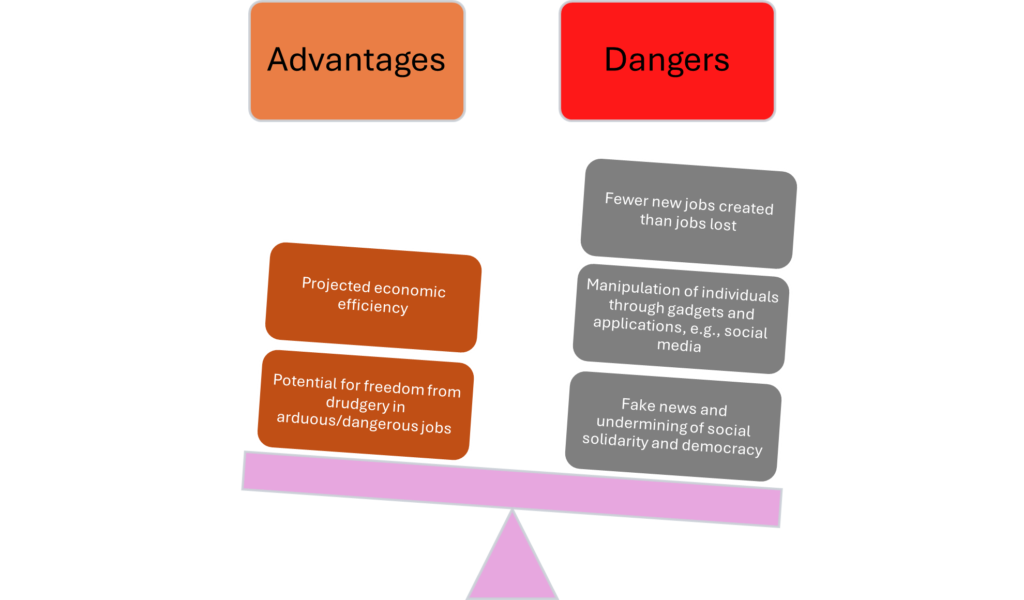
Fig. 1: The advantages and dangers of unexamined AI use on a wide scale

Under the circumstances, it may seem pragmatic to accept AI as ‘already here’ and try to make it more ethical, as the only remedy available for controlling its impact upon the human race, but as Sætra et al (2021) argue ‘[T]he structures that allow Big Tech to gather data as they do now [which create autonomous AI] are contingent; they are not essential or necessary to the social and economic environment’ (p. 24). Bareis and Katzenbach assert that quite often it is the elite who are ‘Talking AI into Being’ (2022).

Those who continue to advocate increasing the reach of the digital to the whole population of the world continue to consider all forms of digital technology as a force for liberation from poverty and oppression. Yet if these moves succeed, they can potentially put AI’s power in the hands of technological and political elite at a time when the IoE stated that ‘too many governments have failed to sufficiently strengthen governance systems, [and] address corruption’ (IoE 2023).

Exposing large numbers of people to the digital forces identified by Deffains (see ‘Part 4: The digitalised environment and the threats to the existing social contract’ in this series of blogs), whether through such political elite, or through Big Tech, carries considerable risk.

Nevertheless, technology in the modern imagination remains closely connected to markers of improved living standards and growth of wealth and these new technologies continue to trigger those connections in popular, and often in academic, discussions too. However, the potential power that these technologies have of controlling individual thought and behaviour, coupled with their need for far less human input than ever before, means that the threats of the concentration of power and control in very few hands and the loss of real freedom for the rest is a real danger that must be engaged with urgently. Consequently, drawing upon a broad range of philosophical and political theories, I explore below some concepts that I argue must be incorporated in a new social contract to protect individuals and vulnerable communities from the severe asymmetries of power between the ordinary human person and Big Tech and authoritarian regimes in control of high-risk digital technologies.

Salient features of a new social contract for the AI age

Respect for the principle of contracting for survival

According to D’Agostino et al (2023) in a social contract ‘the real issue is “the problem of justification”—what principles can be justified to all reasonable citizens or persons’ [ital added].

Thomas Hobbes in his Leviathan (1651) asserted that one such principle, on which most reasonable people would agree, is to not ask a human being to acquiesce to their own destruction without resistance: ‘no man can transferre, or lay down his Right to save himselfe from Death, Wounds, and Imprisonment, (the avoyding whereof is the onely End of laying down any Right,)’.

Does such a danger exist in relation to unexamined and rapid AI use?

Like most commentators on the subject, the Proposal to the AI Act stated that the ‘AI Act is to ensure a high level of protection of health, safety and fundamental rights enshrined in the Charter’, indicating that these areas of people’s lives can be threatened by AI technologies.

Similarly, Professor Choucri’s Social Contract 2020 evokes the Precautionary Principle as the very first principle to undergird the new social contract. The Precautionary principle states that ‘if there is any chance at a technology causing catastrophic harm, and there is no scientific consensus suggesting that the harm will not occur, then those who wish to develop that technology or pursue that research must prove it to be harmless first (see Epstein 1980)’ (Sullins 2023).

Thus, the consensus seems clear that AI uses should be proven to be harmless first, and proven to the satisfaction of most reasonable people around the world, before their mass use is pushed forward.

In his 2016 book, Homo Deus, Professor Yuval Noah Harari carried out a broad overview of the several possible impacts of new technologies, including AI. He pointed out that humans have two kinds of abilities that are used in employment: physical and cognitive. If machines continue to replace these two kinds of labour (and AI is now beginning to replace parts of cognitive labour too) by performing it more efficiently, he asked, ‘What will conscious humans do’? (Harari, 2016, p. 370).

Not only this, but with wearable tech and smarthomes monitoring, measuring and guiding our lives in a far more efficient manner than we can ourselves do, and in some cases smart devices looking after our health from inside our bodies, ‘we may reach a point when it will be impossible to disconnect from this all-knowing network even for a moment. Disconnection will mean death’ (Harari 2016, p. 401).

If we do reach the Hobbesian point where opposing or opting out of this network is clearly seen as necessary for human survival, will we still have the understanding and control to do so if we continue to increase the spheres of our lives where digital systems are constantly exerting ‘wider perceptual control’ (Sales 2019) upon us, making critical thinking and debates difficult to carry out?

A new and just social contract must, therefore, insist on a critical and transparent debate on AI before its widespread adoption so that vulnerable populations around the globe, suffering from knowledge and power deficits, do not walk into agreeing to their own destruction without resistance.

Combating the astronomical asymmetries of power and knowledge

The access to the scientific and commercial knowledge driving the AI revolution, e.g., information about data centres that power the Internet or the rules and laws governing the deployment of hardware and software in different countries, is distributed extremely unequally around the globe. This puts the highly educated professionals in these fields in a position of tremendous power vis-à-vis the citizens, or even nations, that do not have access to academic centres of excellence in these fields, creating global economic inequalities caused by inequitable access to knowledge.

Further, as Allen (2019) points out, many researchers maintain close relationships with Big Business for funding and hence supporting the interests of business, rather than of the ordinary citizen, becomes woven into the very heft and weave of scientific education too.

This inequality of knowledge, as Professor Zuboff (2018) has argued, in the AI economy converts into an ‘absence of reciprocities’ with far-reaching consequences. The ‘surveillance capitalists’ in charge of the digital products and services very often do not depend on ‘the masses’ for employees, or even for their direct income. They employ a handful of highly educated people controlling a large number of machines. As a result, the bargaining power of labour is hugely diminished even in countries with well-developed education systems that do provide general access to scientific knowledge.

The only need that digital capitalism has for the masses is for their ‘data’ or information. It is able to extract this data by providing the masses with ostensibly ‘free’ services such as social media that the user ends up paying for by their personal data.

Morreale et al. (2023) demonstrate how the users of various digital systems contribute personal data and information in a way that is equivalent to extracting their ‘humanness’ to feed the machines in machine-learning AI systems.

“As individuals often do not know how, or do not have the power, to avoid interacting with these systems, they are essentially reduced to ‘labour units assigned to work with tools made available to them by their employers’. Their loss of autonomy and unwaged contribution of their ‘humanness’ for developing new products for corporates is equivalent to the unfair alienation of labour in the Marxian theory of surplus value.”

Under the circumstances, the terms ‘user’ and ‘consumer’ become linguistic strategies that obscure the true relationship of exploitation between the individual user and the corporate provider. A justice of UK Supreme Court, Lord Sales, describing the contracts for digital services, said in 2019 that these contracts provide ‘access to digital platforms on their [the providers’] terms requiring access to your data, and on their very extensive contract terms excluding their legal responsibility’ (Sales 2019).

The new social contract must recognise the individual’s autonomy, and the ‘choice mechanisms [of] … exit, voice, and loyalty’ (Zuboff 2019) as fundamental rights of human individuals to be protected. It must empower all individuals to maintain their human dignity, defined as ‘respect for another human as an “equal citizen” or “moral person”’ (Darwall 2017, p.194). This may even entail government provision of non-digital services allowing the consumers to vote with their feet as ideal market competition scenarios ought to do.

Further, if the political space opened up by the AI Act for ensuring human-centric developments in AI field is to be meaningful, it is to be recognised that breaking up the monopolies of Big Tech is complicated by knowledge asymmetries between political institutions tasked with oversight of these companies and the companies themselves. This is further exacerbated by even more limited resources in many middle- and low-income countries.

Therefore, a new social contract will provide for knowledge equity globally and ensure that the adaptation of AI follows, rather than precedes, the development of relevant knowledge and capabilities amongst people and regulatory authorities.

Development as freedom

As stated earlier in this blog series, a social contract is ultimately about power relations in society. In the modern era, technology has emerged as a significant site for power contestations. As the driver of ‘development’ and growth, the position of technology has been almost unassailable in the past 2-3 centuries. Consequently, labour forces have had to adjust and adapt their skills to fit in with technology as it has evolved and changed.

However, as Professor Zuboff and others have shown, with digital, particularly AI, technologies, things may be ‘different this time’. Professor Zuboff has shown that with AI and similar technologies ultimately the mass of the people may not be needed either as employees or as customers for those who control these technologies. This greatly reduces the power of the masses to bargain with the ‘surveillance capitalists’ in charge of the technologies.

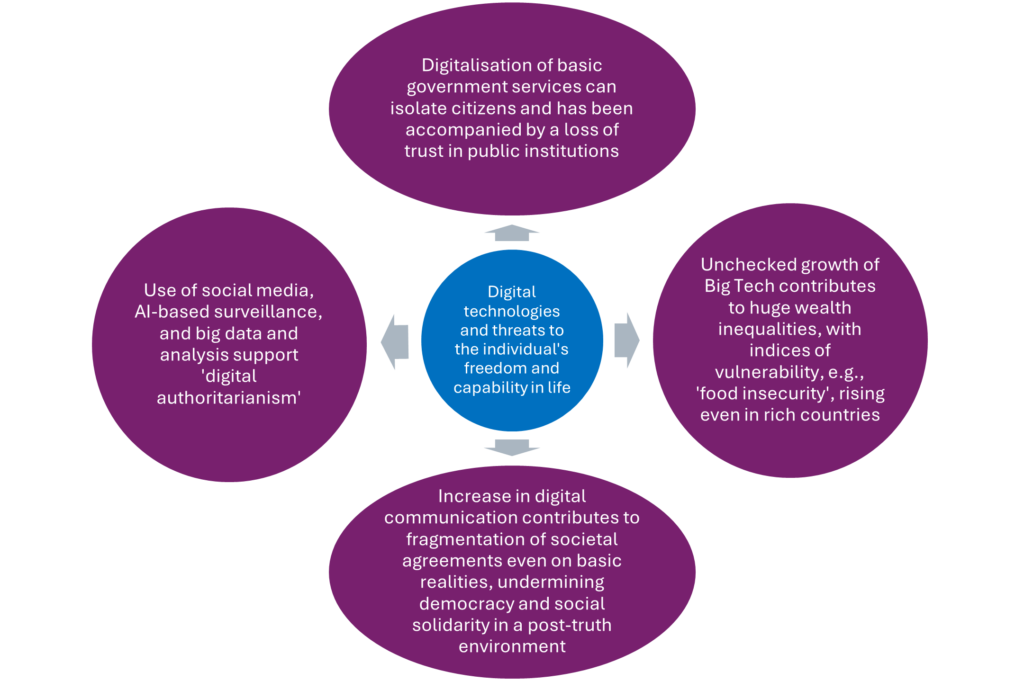
Taken with the other potential dangers they pose – the circumscribing of humans to ever narrower categories of employment, the concentration of wealth and shocking financial inequality, manipulation of the will of the individuals, device-managed isolation of people, the spread of fake news and other forms of political confusion – AI technologies threaten to reconfigure power relations in society in unprecedented ways.

Therefore, their lightening uptake, particularly with their potential for ‘loss of human control’ (Choucri 2020), without adequate public information and debate violates fundamental democratic principles. The gap in the knowledge of the ordinary person is such that Veale and Borgesius criticised the EU’s public consultation on the AI Act in 2020 by saying, ‘[I]t is unclear whether limited existing efforts to include stakeholder representation will enable the deep and meaningful engagement needed from affected communities’ (2021). Yet, the EU’s consultation was the first large-scale effort to take the civil society’s voice on the subject seriously.

Further, stressing the need for clearer information to be made available to the relevant stakeholders on AI, Zhu et al. (2022) proffered the assessment that ‘humans and societies perceive trust in AI in intricate ways, which does not necessarily closely match the trustworthiness of a particular AI system’.

In these circumstances, Professor Amartya Sen’s exhortation from two decades ago to reconceptualise ‘development as freedom’ is a relevant concept. The rationale behind this call was that measuring development in terms of monetary wealth means that it is possible for ‘an organized and politically influential group of “industrialists”’ to ensure their profits are well protected even though ‘significant sacrifice’ is imposed on the ‘population at large’ (p. 121). With the growth of Big Tech we are seeing this happen.

The push to tie-in the entire human population to digital systems, on the basis of their purported economic efficiency, ignores this new reality of the threat to human freedom in a blind bet that the earlier liberatory potential of the internet will somehow come through despite later developments.

A new social contract must push back against this blind faith and examine whether the digital can still deliver on the meaningful freedoms that ‘include the liberty of acting as citizens who matter and whose voices count, rather than living as well-fed, well-clothed, and well-entertained vassals’ (Sen 1999, p. 288). Sen’s economic expertise did not prevent him from recognising that, without dismissing the value of a market economy, we must remember that ‘the more immediate case for the freedom of market transaction lies in the basic importance of that freedom itself’ (p. 112).


Fig. 2: Digital technologies and the threats to individuals’ freedom in a context of little knowledge and power


It is a salutary reminder that the world is facing a climate crisis that has resulted partly from a narrative of Progress that we now find was a very partial, and sometimes erroneous, account of human development. Yet, its sway did allow callous destruction of entire communities, knowledges and ways of life, that was wanton and harmful. In science, as in other branches of knowledge, narrow, but repeatedly mined channels of knowledge, can produce an illusion of deep knowhow, but ultimately, as Professor Sen reminds us, the Buddha’s ‘speeches on nonextremism’ (p. 112) may have vital lessons to teach us today and even the utilisation of  AI technologies that do not threaten addiction or manipulation must be done in consultation with a well-informed public. The freedom of the individual to be informed and consulted on all issues affecting their capability to live a meaningful life must be a fundamental part of the new social contract.

Rawlsian principles of justice

John Rawls’ idea of a fair social contract prioritised between two principles of justice – ‘the priority [was] liberty’ ((Rawls quoted on p. 44 of Kukathas and Pettit), and below that came ‘maximizing the advantage of the worst off, no matter how this may affect the advantages of all others’ (Sen 1999, p.286). A new social contract must secure the priority of liberty at the individual level first. This would also serve to maximize the advantages of the worst off in the current scenario where between ordinary citizens, the knowledge elite and the socio-political elite, the ordinary citizens are massively disadvantaged in relations of power.

The rapid integration of AI technologies in both industry and services without much warning threatens the ‘primacy of liberty’ by severely restricting the freedom of the individual to make use of her best capacity to pursue self-determined goals in life. Instead, she is forced

into ever-decreasing spheres of productive labour, coerced into keeping up with the ‘speed and shock’(Feenberg 2024), uncertainty and anxiety of sudden rapid change, which is often beyond human capacity to cope with. The number of people seeking support for mental health and related issues in England, for example, has seen a significant rise in the past five years as political–economic conditions have felt uncertain and volatile to the ordinary people.

Such conditions must trigger the second principle of first securing the advantages of the ‘worst off’. Economically, as Xavier Oberson has shown ‘AI and robots are not only replacing workers in the industrial sectors but are used more and more in service activities … [moreover] many workers will not have sufficient time or skills to adapt to the constantly evolving automation and economic changes.’ (p. 11)

Under these circumstances, Oberson warns that a ‘triple negative effect’ may result in the long term. It will be brought about by the loss of jobs, impacting on the reduction of income tax paid to the State, at a time when the need of the unemployed for support and retraining would be going up.

Though controversial, proposals to tax and redistribute income from the use of AI, such as proposals for a universal basic income, must be urgently discussed. They will go at least some way to addressing the economic concerns when experts are warning that ‘[So] far, the evidence is this: The fourth industrial revolution seems to be creating fewer jobs in the industries than previous revolutions’ (Klaus Schwab quoted in Oberson 2024, p.12) and they do not expect this trend to reverse.

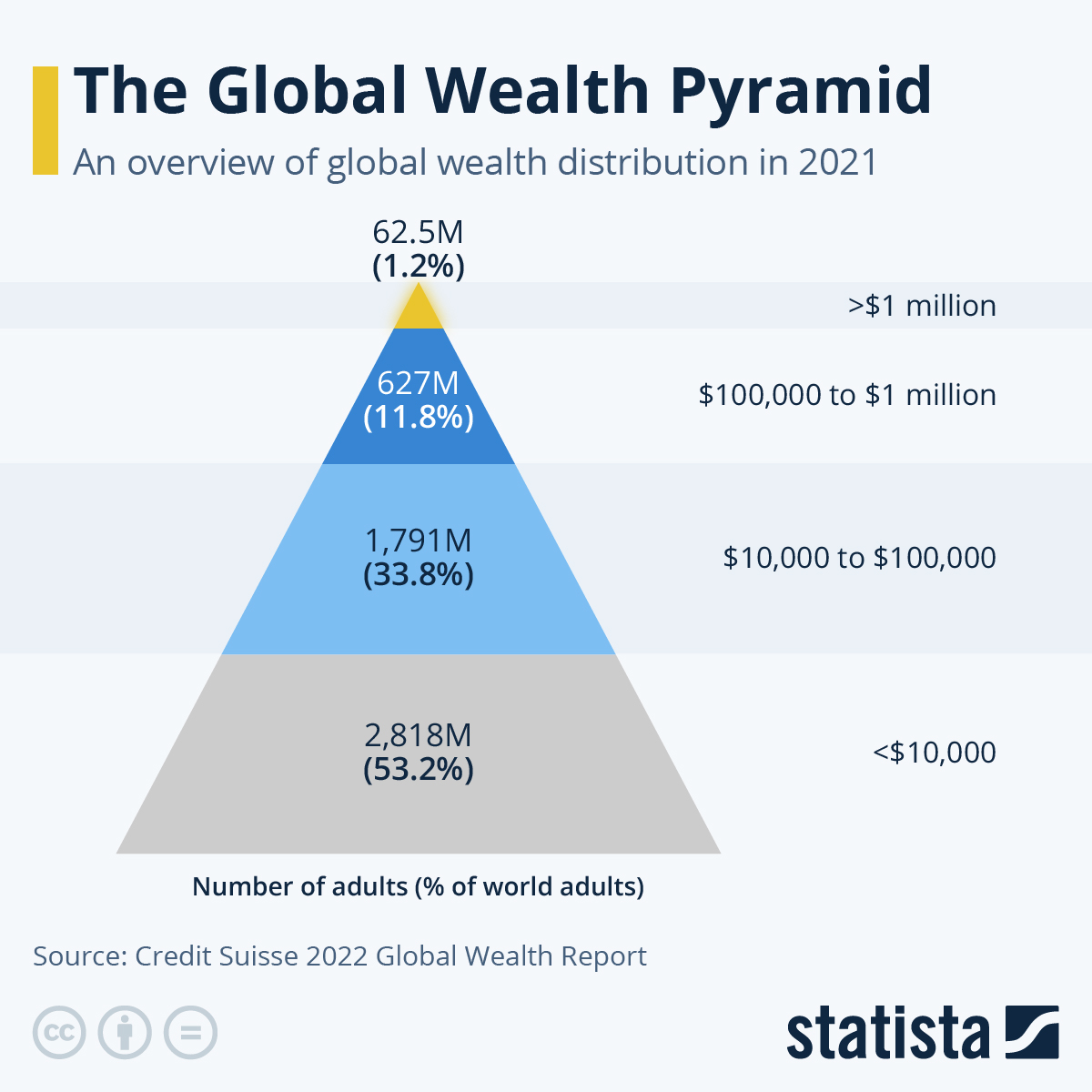
Moreover, the new social contract must take into account more recent scholarship showing that the modern industrial revolutions, though effected in the West, were significantly helped by wealth drawn from many different places. Consequently, a fair distribution of wealth must be done on a planetary basis. As the graphic below shows, the current problems of poverty and underdevelopment in large parts of the world are crying out for a more equitable distribution of the existing levels of wealth rather than prioritising further growth or increasing production.

Infographic: The Global Wealth Pyramid | Statista

Fig. 3: Distribution of wealth in the world, 2021

Source: Chart: The Global Wealth Pyramid | Statista

The need of the hour is to capture all those who may be marginalised under the new technological dispensation by economic deprivations as well as the new but significant threatened deprivations of loss of freedom, dignity and wellbeing from AI use too. A new and just social contract must, therefore, provide a certain minimum protection to all against these conditions even if ‘a Millian “steady state” of zero real growth’ (Leif 2021) is the price to pay.

Human–technology relationship, innovation and Gandhian ‘mind-body-heart human’ vision

Since the fall of the Berlin Wall in 1989 and the diminishing of the challenge of Communism as a system of government, efforts to combat poverty and promote development have often been translated into promoting ‘innovation’ in all societies.

An influential definition of innovation is from Joseph Schumpeter (Becker et al 2012). His ideas of innovation, defined as ‘new combinations’ (Becker et al 2012, p. 924), and entrepreneurship, defined as the ability to push new combinations through against resistance, have received much attention. These are supposed to be intrinsically connected to socio-economic development.

In the 21st century, Schumpeterian innovation has brought together technological research in academia and its conversion into marketable commodities as an almost unassailable shibboleth of economic development stories. Despite their novel mechanisms of exploitation, however, digital technologies in the hands of business still produce societal relationships of ‘haves’ and ‘have-nots’ that need redressing.

As Maskus points out, it is not clear that ‘a patent regime alone can stimulate innovation’(Maskus 2012, p. 263). The narrative of technology as solely responsible for the phenomenal growth in Britain’s wealth in the modern era stands corrected by recent scholarship.  This scholarship shows that wars, violence and empire had a seminal role in allowing technology to become a tool that could draw wealth to Britain while making erstwhile rich countries like India poor (Wardley-Kershaw and Schenk-Hoppé 2022).

In fact, technology-led growth seems always to produce huge wealth inequalities, which when challenged, lead to a race for ever greater production of wealth to accommodate ever higher standards of material comfort for a larger and larger number of people. This is often accompanied by ‘a dialectic of domination, alienation, and other crises of modern life’ (Allen 2019, p. 116).

A new and just social contract must therefore accommodate ‘possibilities for a radical paradigm shift with qualitatively different values and a different framework and way of living’ (Allen 2019, p. 99) where ‘rules of exchange are not defined by commerce but depend on the ability to share and build on the work of others’ (Lessig 2011) aiming at a richer experience of humanness.

This new social contract envisions a new human–tech relationships that acknowledges the always-partial nature of human knowledge. As such, this view, while recognising the utility of technology to improving human lives, emphasises its inherently ambiguous impact on global ecology. The new social contract places humans in a relationship of mutual dependence rather than confrontation with nature and therefore calls for mindful limits on consumption rather than extolling limitless economic growth.

Some of these are already available to us in the form of a ‘harmoniously integrated, mind–body–heart human’ vision of Gandhi as articulated by Dougals Allen with its ‘ key criterion of the need for us to significantly lower our level of consumption’(Allen 2019, p. 128), the ideas of Herbert Marcuse as developed by Andrew Feenberg (Feenberg 2024) and Feenberg’s ideas of a technical politics to humanise and democratise technology (Kirkpatrick 2020), and a more communal sharing of knowledge as embodied in the Creative Commons movement (Lessig 2011) that aims to keep the Internet as an inclusive free space rather than one colonised by commercial interests.

The new social contract takes the human being as currently constituted to be an organism that gathers and processes knowledge in a variety of ways, which, for example, was reflected in Alan Turing’s acceptance of telepathy (Turing 1950) as the most persuasive of arguments against ‘thinking machines’ in his famous article that otherwise extolled being ‘supercritical’ (see, Blog 1 in this series ‘The age of Artificial Intelligence (AI)). It values diversity of learning ways amongst humans.

Placing this human organism in sympathy with its natural environment, the new social contract recognises meaning-creation through ethics and aesthetics as a public good that ensures that self-interest in individuals, entities or institutions does not overwhelm collective good.

References

Allen, D. (2019) Gandhi after 9/11: Creative Nonviolence and Sustainability. Oxford: Oxford University Press. DOI: 10.1093/oso/9780199491490.

Ashrafan, H. (2023) ‘Engineering a social contract: Rawlsian distributive justice through algorithmic game theory and artifcial intelligence’, AI and Ethics 3, pp.1447–1454. https://doi.org/10.1007/s43681-022-00253-6

Bankins, S. and Formosa, P. (2021) ‘Ethical AI at work: the social contract for Artificial Intelligence and its implications for the workplace psychological contract’ in M. Coetzee and A. Deas (eds), Redefining the Psychological Contract in the Digital Era: Redefining the Psychological Contract in the Digital Era. Switzerland: Springer Nature.

Bareis, J. and Katzenbach, C. (2022) ‘Talking AI into being: the narratives and imaginaries of national AI strategies and their performative politics’. Science, Technology, & Human Values, 47(5), 855-881 [online]. Available at: https://doi.org/10.1177/01622439211030007 (accessed 12.12.23).

Becker, M. C., Knudsen, T. and Swedber, R. (2012)  ‘Schumpeter’s Theory of Economic Development: 100 years of development’, J Evol Econ 22, pp. 917–933. DOI 10.1007/s00191-012-0297-x. Published online: 23 October 2012.

Bradford, A. (2023) Digital empires: the global battle to regulate technology. Oxford: Oxford University Press.

Carlsson, V. and Rönnblom, M. (2022) ‘From politics to ethics: transformations in EU policies on digital technology’, Technology in Society, 71 [online]. Available at: https://doi.org/10.1016/j.techsoc.2022.102145 (accessed 8.3.24).

Choucri, N. (2020), ‘UN75: Social Contract 2020 – Toward Safety, Security, & Sustainability for AI World’. The United Nations [online]. Available at: https://www.un.org/en/academic-impact/un75-social-contract-2020-toward-safety-security-sustainability-ai-world#:~:text=Social%20Contract%202020%20helps%20steer,evaluation%20of%20public%20officials%20%E2%80%93%20supported (accessed 25 February 2024).

D’Agostino, F., Gaus, G. and Thrasher, J. (2024) ‘Contemporary approaches to the social contract’, The Stanford Encyclopedia of Philosophy (Spring 2024 Edition), Edward N. Zalta and Uri Nodelman (eds.), forthcoming [online]. Available at:  https://plato.stanford.edu/archives/spr2024/entries/contractarianism-contemporary/ (accessed 9.3.24).

Darwall, S. (2017) ‘Equal dignity and rights’ in R. Debes (ed.) Dignity: A history. OXFORD PHILOSOPHICAL CONCEPTS. New York, 2017 and online edition Oxford Academic, 6e [online]. Available at: https://doi.org/10.1093/acprof:oso/9780199385997.003.0009, Pages 181–202 (accessed 20.3.24).

Deffains, B. (2022) ‘Rethinking the social contract in the digital age’ in Ytheir, J.M. (co-ordinator), Economic reason and political reason: deliberation and the construction of public space in the society of communication. London: John Wiley & Sons, pp. 227–258.

European Commission (EC) (2021) Proposal for a Regulation of the European Parliament and of the Council laying down harmonised rules on artificial intelligence (Artificial Intelligence Act) and amending certain union legislative acts {SEC(2021) 167 final} – {SWD(2021) 84 final} – {SWD(2021) 85 final}. Available at: https://artificialintelligenceact.eu/the-act/ (Accessed: 16 November 2023).

Feenberg, A. (2024) ‘Andrew Feenberg: Marcuse and the New Left – Book Launch’ [online]. Available at: https://www.youtube.com/watch?v=5faYzlSTORE&ab_channel=SFU%27sVancityOfficeofCommunityEngagement (accessed 10.3.24).

Guterres, A., ‘Secretary-General’s Nelson Mandela Lecture: “Tackling the Inequality Pandemic: A New Social Contract for a New Era” [as delivered]’ 18 July 2020 [online]. Available at: Secretary-General’s Nelson Mandela Lecture: “Tackling the Inequality Pandemic: A New Social Contract for a New Era” [as delivered] | United Nations Secretary-General (accessed 10.3.24).

Harari, Y. N. (2017) Homo Deus. Kindle edn. Vintage.

Hobbes, T. (1651) Leviathan, or, the matter, forme, & power of a commonwealth ecclesiasticall and civil. [online] Available at: https://en.wikisource.org/wiki/Leviathan/The_First_Part (Accessed: 26 January 2024).

International Organisation of Employers (IoE), ‘A new social contract: deliberations of employers’, February 2023 [online]. Available at: https://www.ioe-emp.org/news/details/employers-position-on-a-new-social-contract

Interview with Lawrence Lessig, February 2011 [online]. Available at: https://www.wipo.int/wipo_magazine/en/2011/01/article_0002.html (accessed 25.3.24).

Kirkpatrick, G. (2020) Technical politics: Andrew Feenberg’s critical theory of technology. Manchester: Manchester University Press.

Kukathas, C. and Pettit, P. (1990) Rawls: A theory of justice and its critics. Cambridge: Polity Press.

Lord Sales at the Sir Henry Brooke Lecture for BAILII, London: Algorithms, Artificial Intelligence and the Law [2019] UKSpeech 191112 (12 November 2019).

Maskus, K. E., (2012) Private rights and public problems: the global economics of intellectual property in the 21st century. Washington, DC: Peterson Institute for International Economics.

Morreale, F., Bahmanteymouri, E., Burmester, B., Chen, A. and Thorp, M. (2023) ‘The unwitting labourer: extracting humanness in AI training’, AI & Society [online]. Available at: https://doi.org/10.1007/s00146-023-01692-3 (accessed 20.3.24).

Mwamadzingo, M., Koyi, G., Watt, M. and Waziri, K. M. (2023) ‘The world of work and the new social contract’, International Journal of Labour Research, 12 (1-2), pp. 20-40 [online]. Available at: https://www.ilo.org/wcmsp5/groups/public/—ed_dialogue/—actrav/documents/publication/wcms_907017.pdf

Oberson, X. (2024) Taxing Artificial Intelligence. Cheltenham: Edward Elgar. https://www.e-elgar.com/shop/gbp/taxing-artificial-intelligence-9781035307548.html

Sætra, H.S., Coeckelbergh, M. and Danaher, J. (2022) ‘The AI ethicist’s dilemma: fighting Big Tech by supporting Big Tech’, AI Ethics, 2, 15–27 [online]. Available at: https://doi.org/10.1007/s43681-021-00123-7 (accessed 15.3.24).

Sen, A. (1999) Development as freedom. Oxford: Oxford University Press.

Sullins, J. (2023) ‘Information Technology and Moral Values’, The Stanford Encyclopedia of Philosophy , Edward N. Zalta and Uri Nodelman (eds.) [online]. Available at:  https://plato.stanford.edu/archives/fall2023/entries/it-moral-values/.

Turing, A. M. (1950) ‘Computing machinery and intelligence,’ Mind, vol. 49, pp. 433–460. Available at: Article 1 in Google search here (Accessed: 30 October 2023).

Veale, M. and Borgesius, F. M. (2021) ‘Demystifying the draft EU Artificial Intelligence Act:  analysing the good, the bad, and the unclear elements of the proposed approach’ in Computer Law Review International, 22 (4), pp. 97-112. 10.9785/cri-2021-220402

Wardley-Kershaw, J.  and Schenk-Hoppé, K. R. (2022) ‘Economic growth in the UK: the inception’, World, 3(2), 162174. https://doi.org/10.3390/world3020009.

Wenar, L. (2021) ‘John Rawls’, The Stanford Encyclopedia of Philosophy (Summer 2021 Edition), Edward N. Zalta (ed.) [online]. Available at: https://plato.stanford.edu/archives/sum2021/entries/rawls/ (accessed 19.3.24).

Zhu, L., Xu, X., Lu, Q., Governatori, G., Whittle, J. (2022) ‘AI and ethics—operationalizing responsible AI’. In Chen, F., Zhou, J. (eds) Humanity Driven AI. Cham.: Springer. https://doi.org/10.1007/978-3-030-72188-6_2.

Zuboff, S. (2019) ‘Surveillance Capitalism and the Challenge of Collective Action’, New Labor Forum, 28:1, 10-29 [online]. Available at : https://journals.sagepub.com/doi/epub/10.1177/1095796018819461 (accessed 16.3.24).

Photo by Steve Johnson on Unsplash